Why Every Business Needs a Standby Generator
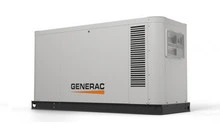
Power outages cost U.S. businesses an estimated $150 billion annually. For commercial operations—hospitals, data centers, manufacturing plants, and retail stores—even a few minutes of downtime can mean lost revenue, spoiled inventory, and damaged equipment. A properly sized standby generator eliminates this risk by providing automatic backup power within seconds of a grid failure.
Step 1: Calculate Your Power Requirements
The single most important decision is getting the right size. An undersized generator will overload and fail; an oversized unit wastes fuel and capital. Start by listing every piece of equipment that must run during an outage: critical loads (emergency lighting, fire suppression, security systems, IT infrastructure), essential loads (HVAC, refrigeration, elevators, point-of-sale systems), and optional loads (general lighting, non-essential outlets, signage). Add up the running watts and multiply by 1.25 to account for starting surges.
Step 2: Choose Your Fuel Type
Natural gas provides unlimited runtime if connected to a utility line. Diesel offers the highest energy density for remote or extended outages. Propane suits rural locations without gas service. Dual-fuel gives maximum flexibility.
Step 3: Understand Transfer Switch Requirements
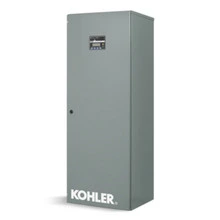
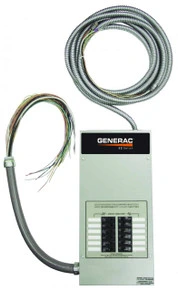
The automatic transfer switch (ATS) monitors utility power and signals the generator to start within seconds of detecting an outage. Size it to match or exceed your main breaker amperage.
Step 4: Plan Your Installation
Factor in local building codes, noise ordinances, fuel storage requirements, and adequate clearance for airflow and maintenance. Most commercial installations require a licensed electrician, a concrete pad, and permitting.
Step 5: Budget for Total Cost of Ownership
Installation typically adds 20-40% to the generator cost. Factor in annual maintenance ($300-$1,500/year) and fuel costs. Most businesses see full ROI within 3-5 years.