Why Proper Generator Sizing Matters
Choosing the right generator size is the single most important decision in the buying process. An undersized generator will overload under heavy demand, potentially damaging both the generator and your electrical equipment. An oversized generator wastes fuel, costs more upfront, and may run inefficiently at low loads — shortening its lifespan through a condition called "wet stacking" in diesel units.
Understanding Watts, Kilowatts, and Load Types
Generator capacity is measured in kilowatts (kW). One kilowatt equals 1,000 watts. There are two types of electrical loads to consider:
- Running watts (continuous load): The power an appliance draws during normal operation
- Starting watts (surge load): The extra power required when an electric motor first starts — typically 2–3 times the running watts for the first few seconds
Your generator must handle the total running watts of all connected equipment PLUS the starting watts of the largest motor that may start at any given time.
Residential Sizing: Essential Circuits Only (7–12 kW)
If you only need to power critical circuits during an outage, a smaller generator will suffice. Typical essential circuit loads include:
- Refrigerator: 700W running / 2,100W starting
- Sump pump: 800W running / 1,300W starting
- Lights (10 LED bulbs): 100W
- Garage door opener: 550W running / 1,100W starting
- Phone/device charging: 100W
- Well pump: 1,000W running / 2,000W starting
Total running: ~3,250W. With starting surge: ~5,500W. A 7–8 kW generator handles this comfortably with room to spare.
Residential Sizing: Whole-Home Backup (14–22 kW)
For whole-home backup including central air conditioning, you need significantly more capacity:
- Central AC (3-ton): 3,500W running / 7,000W starting
- Electric range: 5,000W
- Water heater (electric): 4,500W
- Washer/dryer: 5,000W running / 7,500W starting
- All lighting and outlets: 2,000W
- All essential circuits above: 3,250W
Total running: ~23,250W. A 22 kW generator can handle this with load management. For homes with multiple AC units, an electric vehicle charger, or a hot tub, consider a 24–30 kW unit.
Small Commercial Sizing (22–45 kW)
Small commercial facilities — offices, retail stores, restaurants — typically need 22–45 kW depending on HVAC requirements. Key loads include commercial HVAC (5–15 kW), commercial refrigeration (3–8 kW), POS systems and IT (2–5 kW), and lighting (3–10 kW). Always add 25% overhead for starting surges and future expansion.
Medium Commercial Sizing (45–150 kW)
Medium commercial facilities — warehouses, manufacturing plants, multi-story offices — require 45–150 kW. At this level, you're likely dealing with three-phase power, which requires a three-phase generator and transfer switch. Consult with a licensed electrician and use your facility's utility bills to estimate actual peak demand.
Industrial Sizing (150 kW+)
Large industrial facilities, hospitals, and data centers typically require 150 kW to 2,000+ kW. These applications almost always use diesel generators configured for prime or continuous power. Sizing at this level requires professional engineering analysis, load bank testing, and consideration of redundancy (N+1 configurations).
Fuel Consumption Considerations
Generator fuel consumption varies by load. A 22 kW natural gas standby generator typically consumes 150–250 cubic feet per hour at 50–100% load. A propane unit of the same size uses approximately 2–4 gallons per hour. Diesel generators consume roughly 0.7 gallons per hour per 10 kW at 75% load.
Don't Forget the Transfer Switch
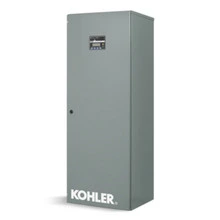
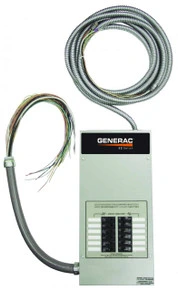
Your transfer switch must be rated equal to or greater than your main electrical panel's breaker amperage. A 200-amp service entrance needs a 200-amp transfer switch. The transfer switch can be configured for full load transfer or load shedding (selectively powering only priority circuits).
Get Help Choosing
Browse generators by size and type at GeneratorProDirect.com. Our commercial power specialists are available Mon–Fri 8am–6pm CT to help with sizing questions. Contact us or browse standby generators to start.